
Prototyping: validate your concept before you build
You have a concept for a new app, a platform or an AI application. But does it work the way you envision? With prototyping, you test the key assumptions before investing in full development. That way, you discover early on what works, what can be improved and which risks still need to be resolved.
A prototype is not a half-finished product, but a focused experiment. For example, you explore whether end users understand the solution, whether the intended functionality adds value and whether the technology does what you expect.
We are happy to help you with a consultation

More certainty before you invest
Developing a new digital product requires investment and choices. How do you know whether users are waiting for the solution? Whether a key feature is technically feasible? And whether the concept works as well in practice as it does on paper?
A prototype makes those questions testable. You can let users experience how the solution works, investigate technical assumptions and gather feedback before full development begins.
This reduces risks, prevents unnecessary development costs and supports the next step with concrete insights.
Prototyping for better digital decisions
Prototyping helps organisations that want to validate a new product, an AI application or a major extension of existing software.
Depending on the question, we explore the usability, the added value for end users or the technical operation of the concept. Sometimes a clickable design is enough to test key assumptions. In other cases, a working prototype is needed to prove that the intended functionality actually works.
For AI applications, this technical validation is especially relevant. After all, a promising concept does not automatically mean that the underlying technology performs reliably enough. Also read how to make the step from AI prototype to live product.
What we help you with

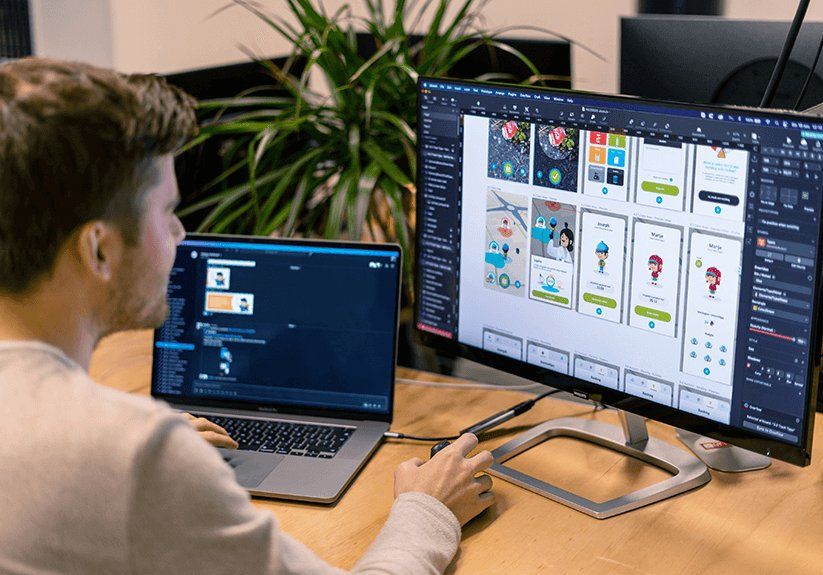
Clickable designs: test user experience and navigation.

Front-end prototypes: test realistic interactions.

MVP light: validate working core features.

AI prototypes: test technical feasibility and value.
How we approach prototyping

01
We determine what we want to validate
We start with the key assumptions behind the concept. What do you need to know before investing further? Do users understand the solution? Does the functionality meet their needs? Or can the chosen technology deliver the desired results?
Together, we determine which questions the prototype should answer. This makes the scope concrete and prevents us from developing more than is needed to reach a reliable conclusion.

02
We choose the right type of prototype
Not every question calls for the same approach. A clickable design may be enough to test a user flow, while technical feasibility requires a working prototype.
We choose the type of prototype that suits the purpose of the validation, looking for the right balance between realism, development effort and the insights we want to gain.
The principle: build no more than is needed to prove what we want to know.

03
We test the prototype in practice
Next, we test whether the prototype does what we expect. Depending on the goal, we do this with end users, relevant stakeholders or through technical tests.
In user tests, we look beyond first reactions. Do users understand the interaction? Can they reach their goal independently? Where do they get stuck, and which features turn out to be truly valuable?
In technical validation, we investigate, for example, whether an integration works, whether an AI model produces sufficiently reliable results or whether a complex feature is feasible.

04
We translate the results into a decision
After the validation, we bring the findings together. Which assumptions have been confirmed? What needs adjusting? And which uncertainties may not yet have been resolved?
Based on these insights, we advise on the next step: continue development, make targeted adjustments or reconsider the concept.
This makes the prototype not just a test, but also a concrete foundation for further product development.


What you can expect
A testable prototype with a clear purpose
Not an extensive development project to demonstrate something, but a focused elaboration of the most important parts. The prototype is tailored to what we want to investigate and offers enough realism to draw valuable conclusions.
Insight into what actually works
You discover how end users interact with the solution and/or how the technology performs in practice. This gives you insight into the strengths of the concept, possible improvements and risks that are better addressed before development.

Well-founded advice for the next step
After the validation, you know which assumptions have been confirmed and what still needs attention. We advise on how to proceed: develop the concept further, adjust parts of it or first explore additional questions.
Where possible, we use the insights, designs and technical work as a starting point for the next development phase.

Frequently asked questions
What is prototyping?

Prototyping is the development of an interactive or working version of a concept to test key assumptions. For example, you explore the user experience, the value of a feature or the technical feasibility before investing in full development.
When is prototyping a good fit?
Prototyping is worth considering when you want to launch a new product, extend an existing solution or apply an innovative technology. Especially when there are still key assumptions or technical uncertainties, a prototype can provide valuable insights.
Who is prototyping suitable for?
For start-ups, scale-ups and established organisations that want to validate their product concept or new features. Whether it is a new app, a business platform or an AI application, prototyping helps to better substantiate development choices.
Is a prototype the same as an MVP?
No. A prototype is intended to test specific assumptions and does not need to be suitable for everyday use. A Minimum Viable Product (MVP) is a first usable version of a product that you can actually take to market and use to gather user experiences over a longer period.
Can you also build AI prototypes?
Yes. DTT develops AI prototypes to explore the feasibility, reliability and practical value of AI applications. Think of testing AI features with representative data, assessing results or validating a technical integration.
What happens after the prototype?
Based on the results, we advise on the next step. When the key assumptions have been confirmed, we can further elaborate the concept and develop it into a full product. If there are still bottlenecks, we determine which adjustments or additional tests are needed.
Full service.
For all things digital.
Custom software, app development, AI integrations, digital strategy and ongoing development.We do it all, with one team in the center of Amsterdam.In consultation, we tailor our digital services to the needs and wishes of our clients.Please feel free to contact us for tailored advice. We are happy to help you move forward digitally.
