Software plays an increasingly important role for many organisations in how they operate, grow, and differentiate themselves. From customer management to internal processes: digital tools largely determine a company’s efficiency and scalability. When making these choices, organisations often look for solutions that are quick to deploy and easy to use.
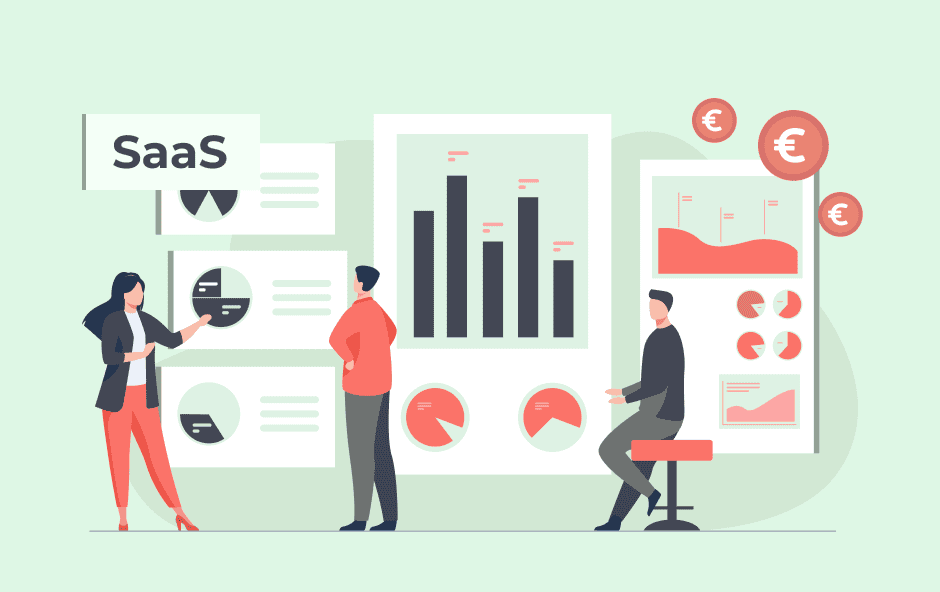
A commonly chosen starting point is a SaaS solution. SaaS stands for Software as a Service: software that you purchase via a subscription. Think of accounting software, CRM systems, or other online platforms. You do not have to build anything, you can get started quickly, and you pay a fixed monthly fee. That is precisely why SaaS is a logical first step for many companies. At the same time, what works well in the beginning can later become restrictive — particularly as an organisation grows and continues to develop.
In this article, you will read when SaaS starts to become limiting, why there is little you can change about that, and what custom software development delivers in the long term.
When success becomes a limitation: the boundaries of SaaS
SaaS solutions are designed for a broad range of organisations. They operate according to fixed standards and predefined functionalities. As long as your processes fit within that framework, this provides clarity and speed. In the initial phase, many organisations mainly experience convenience: going live relatively quickly, minimal configuration, and clear monthly costs.
As an organisation grows and matures, the requirements for software change. Processes become more specific, customer expectations increase, and the need for flexibility grows. In practice, organisations then notice that their SaaS solution increasingly fails to align with how they actually want to operate.
This becomes evident, for example, in situations where:
- desired functionality cannot be added or adjusted
- customer data cannot be freely used or utilised in your own way
- further development is entirely dependent on the supplier’s roadmap
- new features are not possible without waiting or paying extra
- licence costs continue to increase with growth or expansion
- there is no ownership over the technology, data, or intellectual property
What initially brought speed and simplicity increasingly becomes a barrier to further development.
Renting instead of owning
An important difference between SaaS and custom software is ownership.
With a SaaS solution, you use software on a rental basis. The technology does not belong to you, control over data is limited, and you are dependent on the decisions, planning, and ongoing development of a single supplier. The longer you use the software, the greater this dependency often becomes.
You continue investing in licences, but you do not build your own digital value. Switching to another system can therefore become complex and costly.
With custom software, this is different. The software is developed specifically for your organisation. The technology, the data, and decisions about further development remain under your control. This creates room to grow, adapt, and continue developing in a way that fits your organisation.
When does custom software become interesting?
SaaS solutions work well for software that plays a supporting role within your organisation. Think of accounting, email marketing, HR tools, or a standard CRM. These applications are similar for many businesses, where speed and convenience are often more important than customisation or differentiation. In such cases, SaaS is a logical choice: you can get started quickly, know what to expect, and do not have to build or manage anything yourself.
The decision becomes more significant once software no longer merely supports, but directly influences how your organisation operates, grows, and creates value. When processes, customer relationships, or product development become highly dependent on software, that software increasingly determines what is and is not possible. At that point, the question of whether a SaaS solution still fits becomes a strategic one.
Organisations often recognise this turning point through signals such as:
- processes having to adapt to the SaaS software, rather than the other way around
- a SaaS solution that does not align well with new ways of working or growth plans
- temporary workarounds or additional tools being required to get daily work done
- costs continuing to increase without the software offering additional capabilities
- limited control over customer and process data, making insights difficult to utilise
- little room to quickly implement changes or test new ideas
These are signs that the software is no longer evolving with the organisation, but instead becomes a limiting factor in how you operate and develop further.
Custom software: control, ownership, and room to grow
With custom software, you develop software that aligns with how your organisation actually operates — today and tomorrow. The solution is built around your processes, goals, and growth plans, rather than the other way around.
This means you only build what is necessary:
- functionality that adds direct value
- no fixed standards you have to work around
- no dependency on the planning or decisions of a single supplier
You retain control over:
- which features are developed
- how data is stored and utilised
- when and how you continue to develop further
In this way, you invest not only in software that works today, but also in building digital value within your own organisation.
SaaS or custom software? The key differences
The comparison below shows where SaaS and custom software differ.
| Consideration | SaaS | Custom |
|---|---|---|
| Alignment with processes | You adapt your way of working to the software | The software aligns with your processes |
| Flexibility | Fixed features and settings | Features are adaptable and extendable |
| Ownership | No ownership of technology or core data | Full control over software and data |
| Integrations | Standard integrations, limited influence | Integrates with existing systems and tools |
| Scalability | Bound to packages and licences | Grows with your organisation |
| Long-term costs | Low entry cost, recurring costs as you grow | Upfront investment, no increasing licence fees |
| Vendor lock-in | Dependent on one supplier and roadmap | Freedom in management and further development |
| Security and privacy | Limited influence over data storage and security | You decide how data is stored and secured |
| Start-up time and simplicity | Quick to deploy, minimal preparation | Requires preparation, but offers greater control |
SaaS or custom? The right timing makes the difference
SaaS can be a logical and efficient choice for supporting software and a quick start. But once software plays a decisive role in how your organisation operates, grows, and differentiates itself, the requirements change.
When processes have to adapt to the system, flexibility is lacking, and ownership becomes more important, the time has come to consider custom development. A deliberate step towards greater control, scalability, and room to continue growing.
Would you like to have an app developed that complements or replaces existing systems and aligns precisely with your objectives? Then custom development is a logical next step.